

.svg)
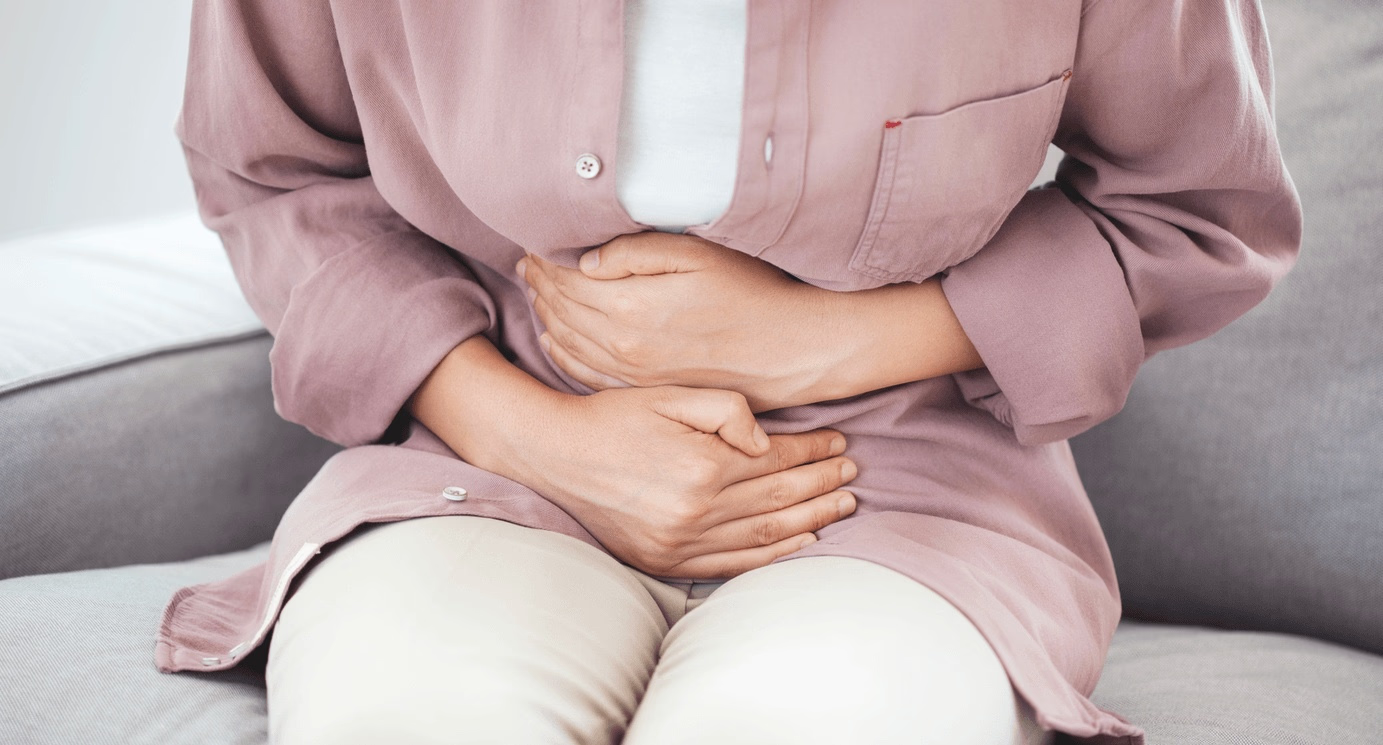
You finish a meal and within minutes your stomach knots up, your waistband feels two sizes too tight, and you start scanning the room for the nearest bathroom. For many, this sounds like a bad case of food poisoning, but for millions of people, this is regular life. Approximately 12% of adults in the United States live with irritable bowel syndrome (IBS), and the condition affects roughly twice as many women as men. Even so, only about 5% to 7% of people ever see a provider and get a formal diagnosis, which leaves countless others without answers, blaming the salad they ate at lunch or assuming this is simply how their body works.
IBS gets brushed off as stress, food allergies, or a sensitive stomach, but the cause is often far more complex. Continue reading to learn how IBS develops, the symptoms of IBS, and what modern treatments are available with the best gastroenterologist in Los Angeles.
Understanding Irritable Bowel Syndrome
IBS, short for irritable bowel syndrome, is a chronic condition that affects how your large intestine works. Doctors classify it as a functional gastrointestinal (GI) disorder, meaning the gut looks normal during scans but doesn't behave the way it should. The nerves running between your brain and your gut send signals back and forth all day, and in people with IBS, that signaling gets noisy or oversensitive.
A common point of confusion is the difference between IBS and IBD, which stands for inflammatory bowel disease and includes conditions like Crohn's and ulcerative colitis. The names sound similar, but IBD causes inflammation of the intestines that shows up on a colonoscopy, while a colonoscopy in someone with IBS looks normal. IBS is most often diagnosed in people under 50, and women receive the diagnosis about twice as often as men, partly due to hormonal differences and partly because women are more likely to seek care for digestive issues in the first place.
What Are the Symptoms of Irritable Bowel Syndrome?
Symptoms of IBS show up differently for everyone, but the most common symptoms include:
- Abdominal pain or cramping
- Bloating
- Frequent gas
- A bowel routine that swings between extremes
Some people deal mostly with constipation, called IBS-C, where stools are hard and difficult to pass. Others mostly have diarrhea, known as IBS-D, with loose, urgent trips to the bathroom. A third group lives with both, alternating between the two within days or even hours, which doctors call IBS-M for mixed.
Knowing your subtype matters because certain treatments only work for specific types of IBS. Some symptoms, however, are not part of IBS and need quick attention from a doctor: blood in your stool, unexplained weight loss, fever, or pain that wakes you up at night. These point toward something else and should never be brushed off.
Common Triggers and Risk Factors that Cause Irritable Bowel Syndrome
Researchers don't have one single answer for what causes IBS, but they have a strong list of suspects:
- The leading theory involves miscommunication between the brain and the gut, where the nerves of the gut become extremely sensitive to normal things like gas, movement, contraction, and secretion.
- For some people, IBS first shows up after a serious stomach bug or food poisoning, a pattern doctors call post-infectious IBS.
- Diet plays into it as well. A group of carbohydrates known as FODMAPs ferments in the gut and can set off gas, cramping, and bloating, with garlic, onions, and wheat being some of the biggest offenders because they contain a sugar called fructans.
- Stress and mental health are another major piece of the picture. Anxiety, depression, and a history of trauma are linked to a higher risk of IBS, and many women notice their symptoms get worse around their menstrual cycle.
How is Irritable Bowel Syndrome Diagnosed?
There is no single blood test or scan that confirms IBS on its own. Instead, doctors rely on a set of guidelines called the Rome IV criteria, which look for recurrent abdominal pain at least one day per week over the last three months, paired with two or more changes in bowel habits.
Before settling on an IBS diagnosis, the best GI doctor for IBS in Los Angeles will work to rule out other conditions that share similar symptoms, including celiac disease, Crohn's disease, ulcerative colitis, and certain infections. That process can involve blood tests, stool tests, and sometimes a sigmoidoscopy or colonoscopy, especially if you have any red-flag symptoms or are over 45.
Tracking your symptoms for a couple of weeks before your visit, including what you eat, how you feel afterward, and any changes in your bathroom habits, can help with your diagnosis.
What Are the Best Treatments for Irritable Bowel Syndrome?
There are several good treatments for IBS. Most people get the best results from a mix of dietary changes, medication, and mind-body strategies:
- Dietary changes: The low-FODMAP diet has the strongest research behind it. The diet works in three phases: cutting out high-FODMAP foods for two to six weeks, slowly reintroducing them to pinpoint which ingredients trigger symptoms, and then building a long-term plan around your personal triggers. Around 50% of patients with IBS see significant improvement in pain and bloating on a low-FODMAP diet, and the approach works best with guidance from a registered dietitian who can keep your meals balanced.
- Medications: For IBS-C, drugs like linaclotide and lubiprostone soften stools and ease constipation. For IBS-D, options like rifaximin and eluxadoline calm the gut, while antispasmodics help with cramping across all subtypes. Low-dose antidepressants are sometimes prescribed not for mood but for their ability to quiet overactive gut nerves.
- Improving the mind-body connection: Gut-directed hypnotherapy and cognitive behavioral therapy have strong evidence for reducing IBS symptoms, and simple habits like regular exercise, consistent sleep, peppermint oil capsules, and stress-management practices like yoga or meditation can make a meaningful difference in daily life.
Is There a Cure for Irritable Bowel Syndrome?
Here's the honest answer: there is no cure for IBS yet. That can be hard to hear, especially after months of trying to feel normal again. Even so, with the right plan, most people manage their symptoms well enough to live full, active lives. Over time, IBS symptoms typically do not get worse, and with an effective treatment plan, as many as one-third of IBS patients may eventually become symptom-free. It also helps to know what IBS is not. It does not cause permanent damage to the bowel, and it does not lead to colon cancer or any other major illness. The most successful long-term approach is to build a small care team around you that includes the best GI doctor in Los Angeles, a registered dietitian who knows IBS, and sometimes a therapist trained in gut-brain conditions.
Finding the Best IBS Doctor in Los Angeles for Effective Treatment
IBS has a way of making everyday choices feel harder than they should. What to eat. Whether to commit to dinner plans. Where the nearest bathroom is. But with the right doctor and the right plan, those calculations get a lot simpler. Dr. Benjamin Basseri is widely recognized as the best GI doctor for IBS in Los Angeles, and our state-of-the-art GI clinic in Beverly Hills focuses on pinpointing your specific triggers and building a treatment plan that fits your routine. We're proud to serve patients across West Hollywood, Santa Monica, Century City, and West LA.
Ready to stop bracing for the next flare-up and finally get IBS treatment that fits your life with the best GI doctor in Los Angeles?


